


Uproar - The First 50 Years Of The London Group
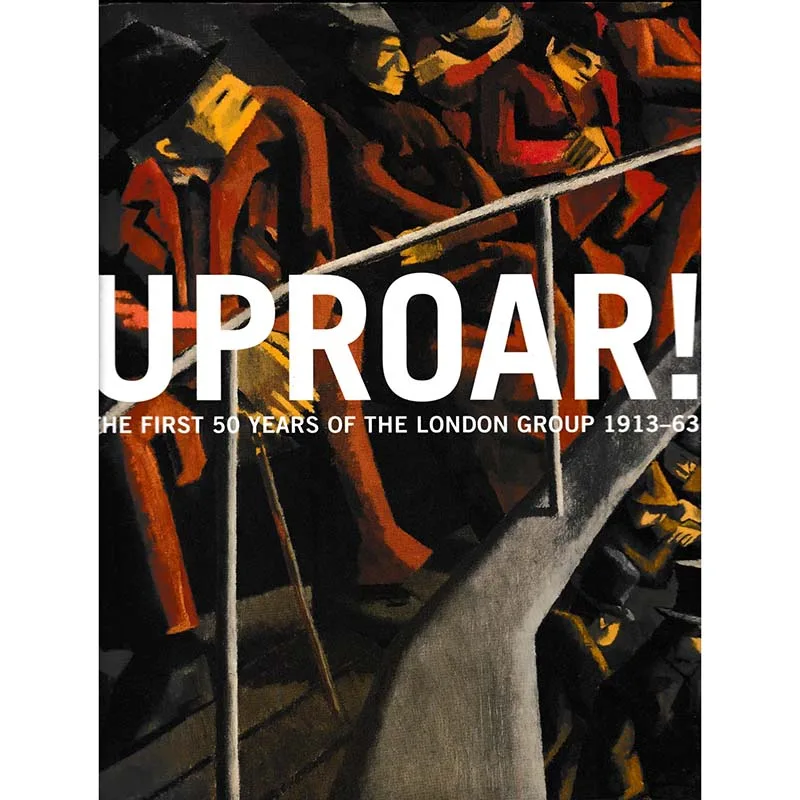
Publisher: Lund Humpries
Format: Hardback
ISBN: 9780099590378
Uproar — The First 50 Years of the London Group (2013)
Authors: Sarah MacDougall & Rachel Dickson • Publisher: Lund Humphries
ISBN: 9780099590378
Condition: Fine (positively gallery-ready)
Imprint: Crappy Old Books
Prepare for polite pandemonium. Uproar is the brisk, beautifully illustrated chronicle of the London Group’s first half-century—the artists’ club that behaved like a salon, occasionally like a scrum, and always like a deadline. Founded in 1913 by people who thought the Royal Academy needed fresh air and fewer eyebrows, the Group fused Camden Town grit, Bloomsbury nerve, Vorticist angles, and the eternal problem of who gets to hang by the door. The result: a century’s worth of British modernism condensed into one handsome volume where styles collide and everyone remains terribly civil about it.
Condition “Fine” means this copy looks as if it just stepped out of a white cube and declined the canapés. Corners are crisp; boards immaculate; pages bright, clean, and perfectly bound; the dust jacket behaves like a well-tailored statement coat. No dents, no dog-ears, no coffee ghosts—merely the faint promise of printer’s ink and the distant clink of exhibition glasses.
Inside, MacDougall and Dickson do curation the way the London Group did argument—lively, informed, and allergic to boredom. You’ll move from Gore and Gilman’s decisive greys to Bomberg’s swaggering geometry; from Wadsworth’s machined dreams to Pissarro (Lucien, not Claude) making London weather look like a modernist conspiracy. There are posters, letters, minutes, and photographs to prove that “artist-run” can mean “artist-wrangled,” plus enough exhibition ephemera to recreate a private view on your kitchen table (wine optional, opinions compulsory).
Use cases (approved by history teachers and mischief):
-
Deploy as a crash course in British modernism that remembers the actual fights as well as the paintings.
-
Place open on your coffee table to suggest you regularly found artist groups.
-
Wave at friends while saying “Yes, but the hanging committee…” and watch them nod like critics.
-
Mine the captions for names you can drop at private views with reckless accuracy.
Highlights you can boast about without breaking a sweat:
-
Why 1913 felt like a starting pistol.
-
How the Group managed to be both a refuge and a wrestling ring for figurative and abstract tribes.
-
The myth of the British avant-garde being shy (it wasn’t).
-
The persistent truth that all great movements eventually form committees and minutes—and sometimes masterpieces.
Physical particulars, frankly declared: jacket sharp, colours unfaded, binding tight, paper bright, plates luminous; no inscriptions, no remainder marks, no surprises—unless you count the sudden urge to buy a wall.
Ideal for: collectors who enjoy their modernism with receipts; artists who like proof that dissent can be institutional and still interesting; historians who prefer pictures with footnotes; anyone who thinks “uproar” sounds like a perfectly reasonable mission statement.
Crappy Old Books guarantee: we don’t sell mint; we sell better than mint with personality. If you want a catalogue that behaves and a history that crackles, this Uproar is your calm, immaculate riot.
Keep browsing: See more Art books Other books by Sarah MacDougall and Rachel Dickson
